This article is about why that button lies, why fighting it by hand costs you more than time, and how to stop the whole mess before it ever reaches your screen.
The psychology of hostile web design
The trick has a name. Designers call it a Dark Pattern — an interface built not to help you but to steer you into an action you never meant to take. The close button is the industry's favorite target, because everyone reaches for it the same way, without thinking.
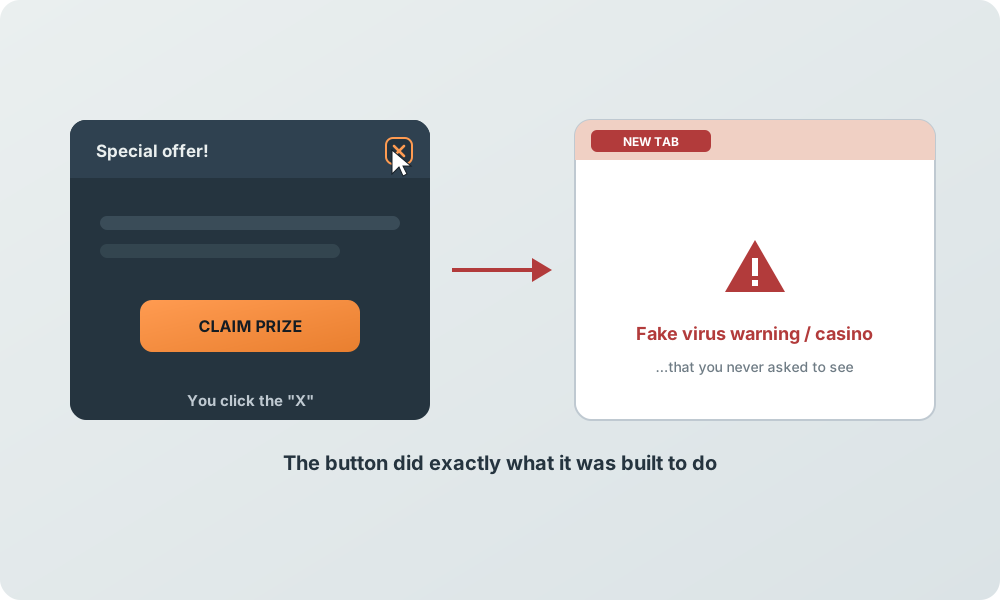
That reflex is the whole point. Years of using computers have trained your hand to find the "X" in the top corner and click. Advertisers know this better than you do, so they exploit it. Sometimes the "X" is not a button at all but a small graphic wired to a hyperlink, so the gesture you trust to dismiss an ad instead opens it. Other times the entire background behind the pop-up is one big invisible trigger, waiting for any click to fire. Miss the real target by a few pixels and you have "engaged."
The hyperlinked "X"
The close icon is a graphic wired to a link, so the gesture that should dismiss the ad opens it instead.
The invisible trigger
The whole background behind the pop-up is one big clickable target, waiting for any tap to fire.
The guilt-trip prompt
A "No thanks" button worded to make you feel bad — and every interaction with it still counts as engagement.
A billable click
A click looks identical in the data whether you wanted it or not, so your instinct to escape becomes revenue.
Why go to all this trouble? Money. Ad networks pay on clicks, and a click looks identical in the data whether you wanted it or not. By turning your instinct to escape into a click they can bill, advertisers inflate their numbers using nothing but your muscle memory. The ad that refuses to close isn't broken. Closing it was never the option on offer.
The invisible cost of engagement
Losing thirty seconds to a fake button is annoying. What happens quietly underneath is worse.
Every move you make against these things is measured. Hunting for the genuine close button, scrolling past a video that clings to the corner, clicking "No thanks" on a prompt designed to make you feel guilty — all of it registers as interaction. To the algorithm sorting audiences, an interaction is a signal, and it does not care that yours was frustrated or accidental. A click is attention, and attention is the product being sold.
So the system draws a conclusion about you and files you as a responsive user. The reward for engaging, even by mistake, is more of the same and worse. The next site loads heavier pop-ups, stickier videos, more aggressive overlays, because the profile now says you are the kind of visitor who reacts. Playing the game harder only teaches the game to come after you harder.
Escaping the whack-a-mole trap
There is no winning a contest where your opponent writes the rules mid-play and rewrites them the moment you adapt. If the "X" is a decoy and every touch feeds the machine, then sharpening your own reflexes is not a strategy. It is the trap working as designed.
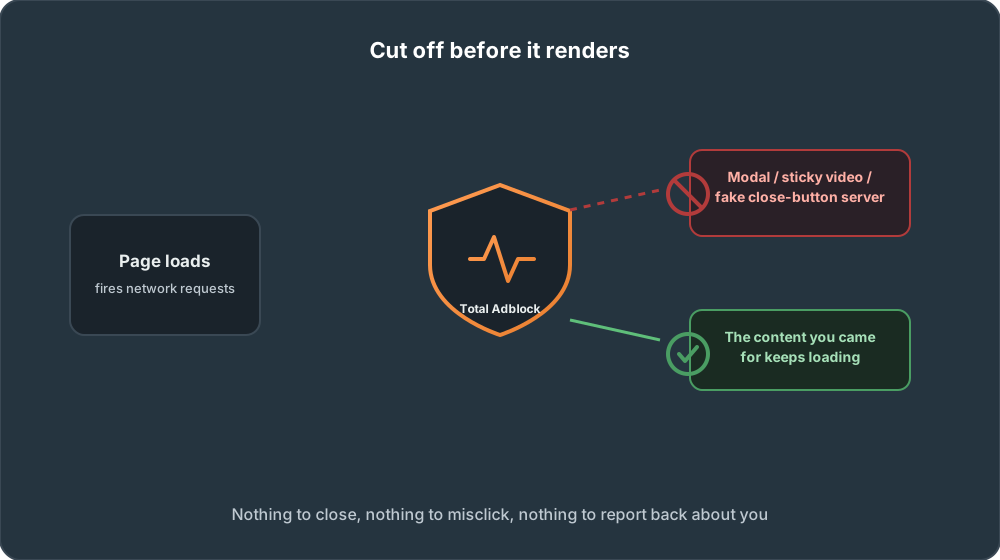
The exit is not faster clicking or keener eyes. It is refusing to play the round at all. Instead of getting better at closing pop-ups, the real fix is making sure they never load, so there is nothing to close, nothing to misclick, and nothing to report back about you. That means dropping the reactive stance entirely — no more spotting and dismissing — and moving the defense to a point before any of it reaches the screen.
Changing the rules with the Total Adblock Browser Extension app
A Dark Pattern only works once it is drawn on your screen. That is its single dependency, and it is also its weakness. Stop the code that builds the overlay from running, and the fake button, the sticky video, and the guilt-trip prompt simply never exist for you to fight.
That is the point where the Total Adblock Browser Extension app steps in. Rather than leaving you to guess which "X" is safe and which one launches a casino, it watches the network requests a page fires the instant you load it. The servers reaching out to deliver modal overlays, clinging video players, and counterfeit close buttons are identified and cut off before the browser renders them. The pop-up is never painted, so you spend zero cognitive energy dismissing it — and because it never appears, you never generate the accidental click that gets you flagged as responsive in the first place.